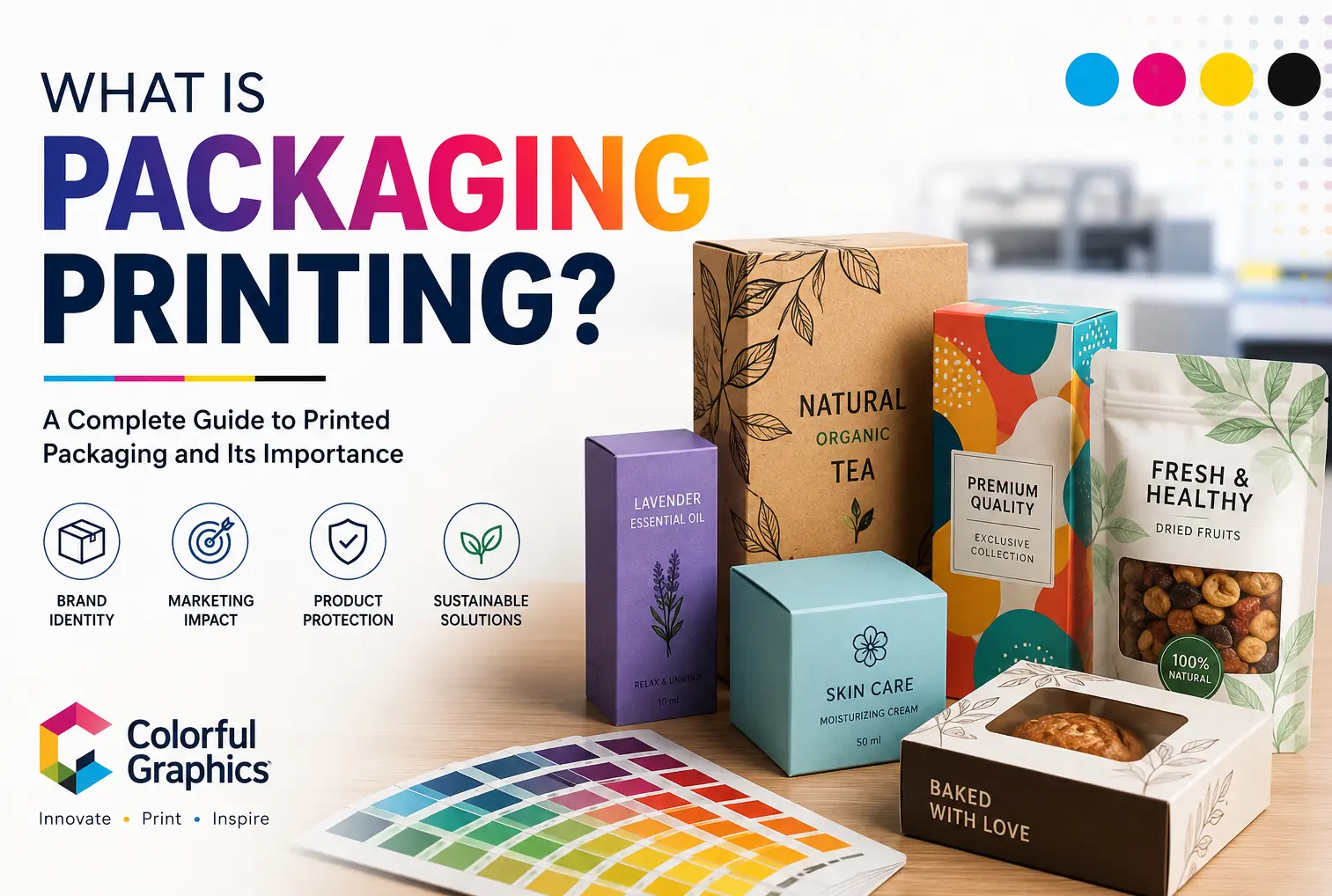
What Is Packaging Printing? A Complete Guide for Businesses in India
Packaging is often the first thing a customer notices before using a product. Whether it is a food packet, cosmetic box, medicine carton, e-commerce parcel, or product pouch, the packaging communicates important information about the brand and the product.
But how does a plain box, pouch, bottle, or carton become attractive, informative, and brand-ready?
The answer is packaging printing.
In this guide, we explain what packaging printing is, how it works, the different printing methods used in India, its benefits, applications, and how businesses can choose the right packaging printing solution.
What Is Packaging Printing?
Packaging printing is the process of printing text, images, logos, product information, branding elements, and other graphics directly onto packaging materials or onto labels and packaging films.
It is used to make product packaging visually appealing while providing essential information such as:
- Brand name and logo
- Product name and description
- Ingredients and nutritional information
- Manufacturing and expiry dates
- MRP and other required details
- Barcode and QR code
- Usage instructions
- Warnings and regulatory information
- Contact and manufacturer details
Packaging printing can be performed on materials such as paper, paperboard, corrugated sheets, plastic films, laminates, pouches, labels, metal containers, glass, and other packaging substrates.
In India, packaging printing is widely used across industries including FMCG, food and beverages, pharmaceuticals, cosmetics, personal care, electronics, retail, agriculture, and e-commerce.
Why Is Packaging Printing Important?
Packaging does more than protect a product. It can influence how customers perceive a brand.
A well-designed and professionally printed package can help a product stand out on a crowded retail shelf or online marketplace.
1. Builds Brand Recognition
Consistent use of colours, logos, fonts, graphics, and brand messaging helps customers recognise a product.
For example, when a company uses the same visual identity across cartons, pouches, labels, and shipping boxes, customers can identify the brand more easily.
2. Improves Product Presentation
High-quality printing can make packaging look professional and attractive. Finishes such as matte, gloss, metallic effects, embossing, and spot effects can further enhance the appearance of premium packaging.
3. Communicates Product Information
Packaging printing allows manufacturers to display important product information in a clear and readable format.
This is particularly important for products sold in regulated categories such as food, pharmaceuticals, and cosmetics.
4. Supports Marketing
Packaging itself can act as a marketing tool.
A strong package design can communicate a product’s benefits, positioning, brand personality, and promotional message without requiring a separate advertisement.
5. Helps Products Stand Out
Retail shelves can contain hundreds of competing products. Effective packaging design and printing can help attract attention and create differentiation.
What Are the Different Types of Packaging Printing?
The best printing process depends on factors such as packaging material, quantity, artwork, colour requirements, turnaround time, and budget.
Some of the most common packaging printing technologies include the following.
1. Flexographic Printing
Flexographic printing, commonly called flexo printing, is widely used for packaging applications.
It uses flexible printing plates to transfer ink onto materials such as plastic films, paper, labels, and corrugated substrates.
Flexo printing is particularly suitable for high-volume production because it can deliver consistent results at production speed.
Common applications include:
- Flexible packaging
- Food pouches
- Plastic packaging films
- Labels
- Paper bags
- Corrugated packaging
- FMCG packaging
2. Rotogravure Printing
Rotogravure printing is a high-quality printing process commonly used for large-volume packaging production.
The process uses engraved cylinders to transfer ink onto the packaging material.
It is known for producing detailed images, strong colour reproduction, and consistent print quality.
Common applications include:
- Flexible packaging
- Laminated pouches
- Snack packaging
- Food packaging
- Consumer product packaging
Rotogravure is generally more suitable for long production runs because cylinder preparation can involve higher initial costs.
3. Digital Packaging Printing
Digital printing transfers artwork directly from a digital file to the printing substrate without requiring conventional printing plates.
This makes it useful for short runs, customised packaging, product variations, prototypes, and faster artwork changes.
Digital packaging printing can be particularly useful for businesses launching new products or testing packaging designs before moving to large-scale production.
Advantages include:
- No conventional printing plates
- Faster setup
- Suitable for short runs
- Variable data printing
- Personalisation
- Quick design changes
4. Offset Printing
Offset printing is commonly used for paper-based packaging, cartons, boxes, and other printed materials.
It can deliver sharp text, detailed graphics, and high-quality colour reproduction.
Offset printing is often considered for folding cartons and premium paperboard packaging where image quality is important.
5. Screen Printing
Screen printing uses a mesh screen to transfer ink onto a surface.
It is suitable for certain packaging applications where thicker ink deposits, special effects, or printing on specific substrates are required.
It can be used for selected applications involving containers, promotional packaging, and specialty products.
What Materials Can Be Used for Packaging Printing?
Packaging printing is not limited to cardboard boxes.
Depending on the product and packaging format, printing can be carried out on a wide range of materials.
Common packaging substrates include:
- Paper
- Paperboard
- Corrugated board
- Kraft paper
- Plastic films
- Laminated films
- Aluminium foil
- Adhesive label stock
- Flexible packaging materials
- Certain rigid packaging surfaces
The choice of substrate affects the printing process, ink selection, finishing requirements, durability, and overall packaging cost.
What Is the Difference Between Packaging Printing and Label Printing?
Packaging printing and label printing are related but not identical.
Packaging printing generally refers to printing directly on packaging materials or components such as cartons, pouches, bags, films, and boxes.
Label printing involves producing a separate printed label that is subsequently attached to a product or package.
For example, a printed biscuit pouch is packaging printing, while a self-adhesive label applied to a bottle is label printing.
Some products use both printed packaging and labels depending on their design and production requirements.
What Are the Benefits of High-Quality Packaging Printing?
Investing in good packaging printing can provide several benefits to manufacturers and brands.
Better Brand Image
Professional printing creates a more consistent and credible visual identity.
Stronger Shelf Appeal
Colour, typography, images, and finishing can help attract customer attention.
Better Information Visibility
Clear printing makes essential product information easier to read.
Product Differentiation
Unique packaging can help distinguish one product from competing products.
Marketing Opportunity
Packaging provides additional space for brand messaging, product benefits, QR codes, campaigns, and promotional communication.
Support for Premium Positioning
Special printing effects and finishing can contribute to a premium appearance for products positioned at higher price points.
How Does the Packaging Printing Process Work?
Although the exact process varies depending on the technology and packaging format, packaging printing generally follows several stages.
Step 1: Packaging Design
The process begins with artwork containing the brand identity, product information, graphics, colours, and other required elements.
Step 2: Prepress
The artwork is checked and prepared for production. This may include colour management, resolution checks, trapping, bleed, dielines, and other technical adjustments.
Step 3: Printing
The prepared artwork is transferred to the selected packaging material using the appropriate printing technology.
Step 4: Finishing
Depending on the packaging, finishing may include lamination, varnishing, coating, embossing, foil effects, cutting, creasing, or other processes.
Step 5: Conversion
The printed material is converted into the required packaging format, such as a carton, pouch, bag, sleeve, or label.
Step 6: Quality Inspection
The finished packaging is checked for colour consistency, print registration, text accuracy, defects, dimensions, and overall quality before dispatch.
How Much Does Packaging Printing Cost in India?
There is no single fixed price for packaging printing in India.
The final cost depends on several factors, including:
- Packaging material
- Packaging size
- Printing technology
- Number of colours
- Printing quantity
- Artwork complexity
- Number of designs or SKUs
- Lamination and finishing
- Packaging structure
- Plate or cylinder requirements
- Order frequency
- Delivery location
Generally, larger production volumes can reduce the per-unit printing cost because setup expenses are distributed across more units.
For an accurate quotation, businesses should provide the packaging size, material, quantity, artwork requirements, printing specifications, and finishing requirements to the packaging printer.
How to Choose a Packaging Printing Company in India?
Choosing the right packaging printing partner is important because packaging quality can directly affect product presentation and production efficiency.
Before selecting a packaging printer, consider the following:
Printing Quality
Ask for physical samples and evaluate colour accuracy, sharpness, registration, and finishing.
Material Knowledge
The printer should understand the material being used and recommend suitable inks, coatings, and printing processes.
Production Capacity
Make sure the supplier can handle your expected order volume and production schedule.
Quality Control
Check whether the company follows systematic quality-control procedures throughout production.
Customisation
If you have multiple product variants or specialised packaging requirements, check the printer’s ability to handle different designs and formats.
Lead Time
Packaging delays can affect product launches and supply chains, so confirm realistic production and delivery timelines.
Sustainability
For brands targeting environmentally conscious consumers, discuss recyclable materials, material reduction, water-based inks, and other sustainable packaging options where technically and commercially appropriate.
Packaging Printing Trends in India
The Indian packaging industry is evolving as brands respond to changing consumer expectations, e-commerce growth, product diversification, and sustainability concerns.
Some notable trends include:
Sustainable Packaging
Businesses are increasingly exploring recyclable, lightweight, and resource-efficient packaging options.
Digital Printing
Digital technology is creating opportunities for short-run production, personalisation, and faster packaging development.
Smart Packaging
QR codes and other connected packaging features can link physical products to digital information, product authentication, campaigns, or customer engagement.
Premium Packaging
Brands in categories such as cosmetics, speciality foods, beverages, and consumer products are increasingly using sophisticated design and finishing to create premium experiences.
E-Commerce Packaging
The growth of online shopping has increased the importance of packaging that can withstand transportation while maintaining brand presentation.
Packaging Printing for Different Industries
Packaging requirements differ from one industry to another.
Food Packaging
Food packaging often requires clear product information, attractive graphics, strong print quality, and materials suitable for the intended application.
Pharmaceutical Packaging
Pharmaceutical packaging places a strong emphasis on legibility, accurate information, compliance, traceability, and product identification.
Cosmetic Packaging
Cosmetics brands often focus heavily on premium design, colour, finishing, and visual consistency.
FMCG Packaging
FMCG packaging needs to balance cost, durability, brand visibility, production efficiency, and consumer appeal.
E-Commerce Packaging
E-commerce packaging needs to protect products during handling and transportation while providing opportunities for brand communication.
Frequently Asked Questions About Packaging Printing
What is packaging printing in simple words?
Packaging printing is the process of printing a brand’s design, product information, images, and other details on packaging materials such as boxes, pouches, films, cartons, bags, and labels.
Which printing method is best for packaging?
There is no single best printing method. Flexographic, rotogravure, digital, offset, and other technologies are selected according to the packaging material, quantity, artwork, quality requirements, and budget.
What is the most common printing method for flexible packaging?
Flexographic and rotogravure printing are widely used for flexible packaging. The appropriate choice depends on factors such as order volume, design complexity, material, colour requirements, and production economics.
Is digital printing suitable for packaging?
Yes. Digital printing can be useful for short production runs, prototypes, customised packaging, multiple SKUs, and applications where quick artwork changes are important.
Can packaging be printed in multiple colours?
Yes. Packaging can be produced using multiple colours, depending on the printing process, equipment, substrate, and design requirements.
Is packaging printing environmentally friendly?
The environmental impact depends on the materials, inks, coatings, manufacturing process, energy consumption, waste, and end-of-life recyclability. Choosing suitable recyclable or resource-efficient materials and optimising packaging design can help reduce environmental impact.
Final Thoughts
Packaging printing is an essential part of modern product packaging. It combines printing technology, packaging materials, graphic design, branding, and manufacturing to create packaging that protects products while communicating with customers.
For Indian businesses, choosing the right packaging printing process depends on the product, packaging material, order quantity, design, budget, market positioning, and required production speed.
Whether you are a startup launching your first product, an FMCG manufacturer managing multiple SKUs, or an established brand looking to upgrade its packaging, understanding packaging printing can help you make better decisions about quality, cost, branding, and production efficiency.
The right packaging is not simply a container for a product—it can become one of the most visible parts of the brand experience.